We believe that everything has its place in this world. So do brands that want to enter new markets.
Mintolled is a global spirits brand entering the Romanian market. Its identity is fixed: the same wordmark, the same packaging, the same design system it uses everywhere else. Nothing about the product can be localised.
The brand's problem is not that it looks foreign. It is that it belongs nowhere in particular.
Warming it up would break the identity. So the brand stays exactly as it is, and everything around it changes: the light, the room, the air, the sound.
Belonging is expressed as context, never as costume.
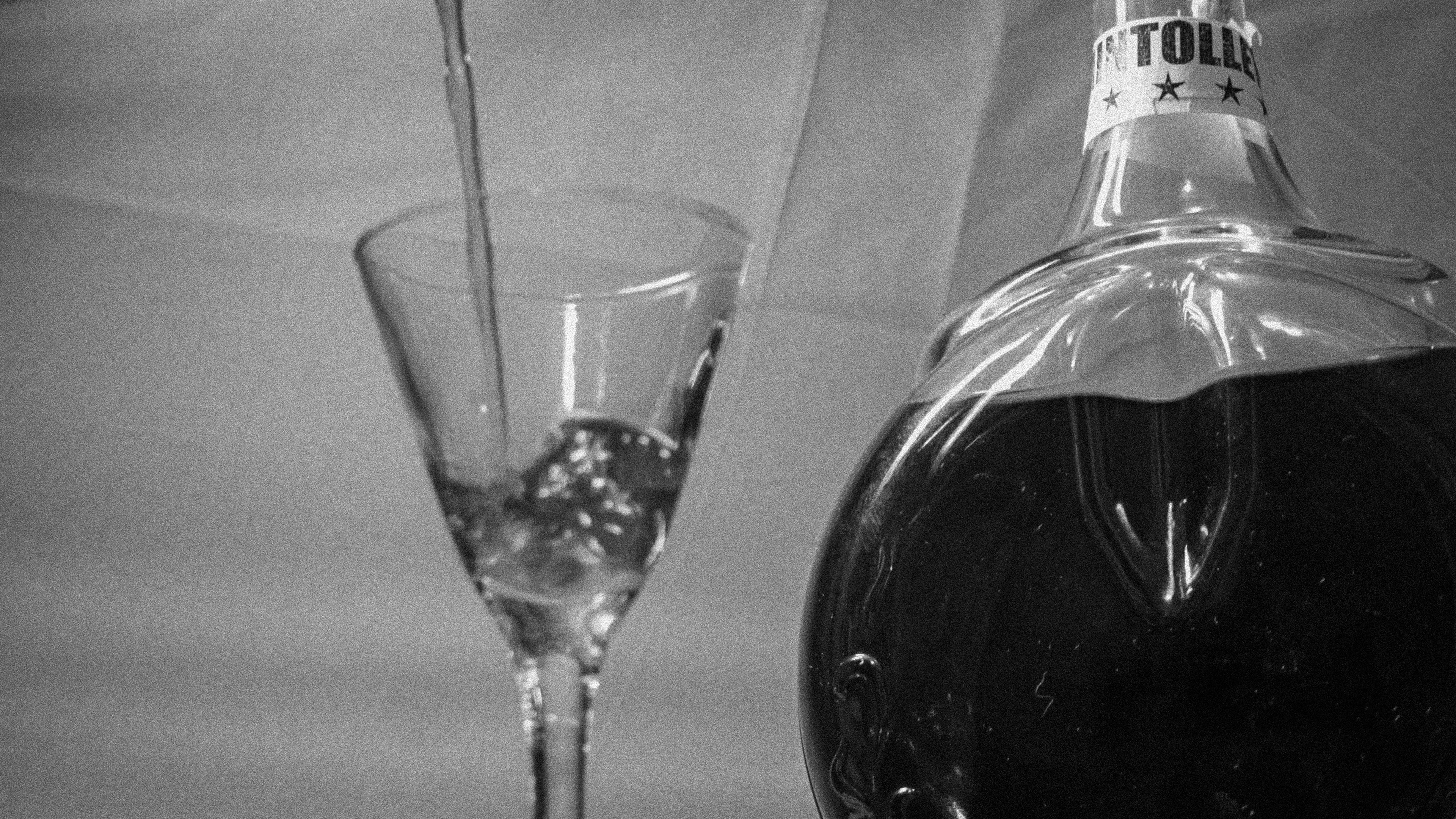
There is no folk imagery, no traditional dress, no landscape postcard. The bottle in the first frame is the same bottle in the last.
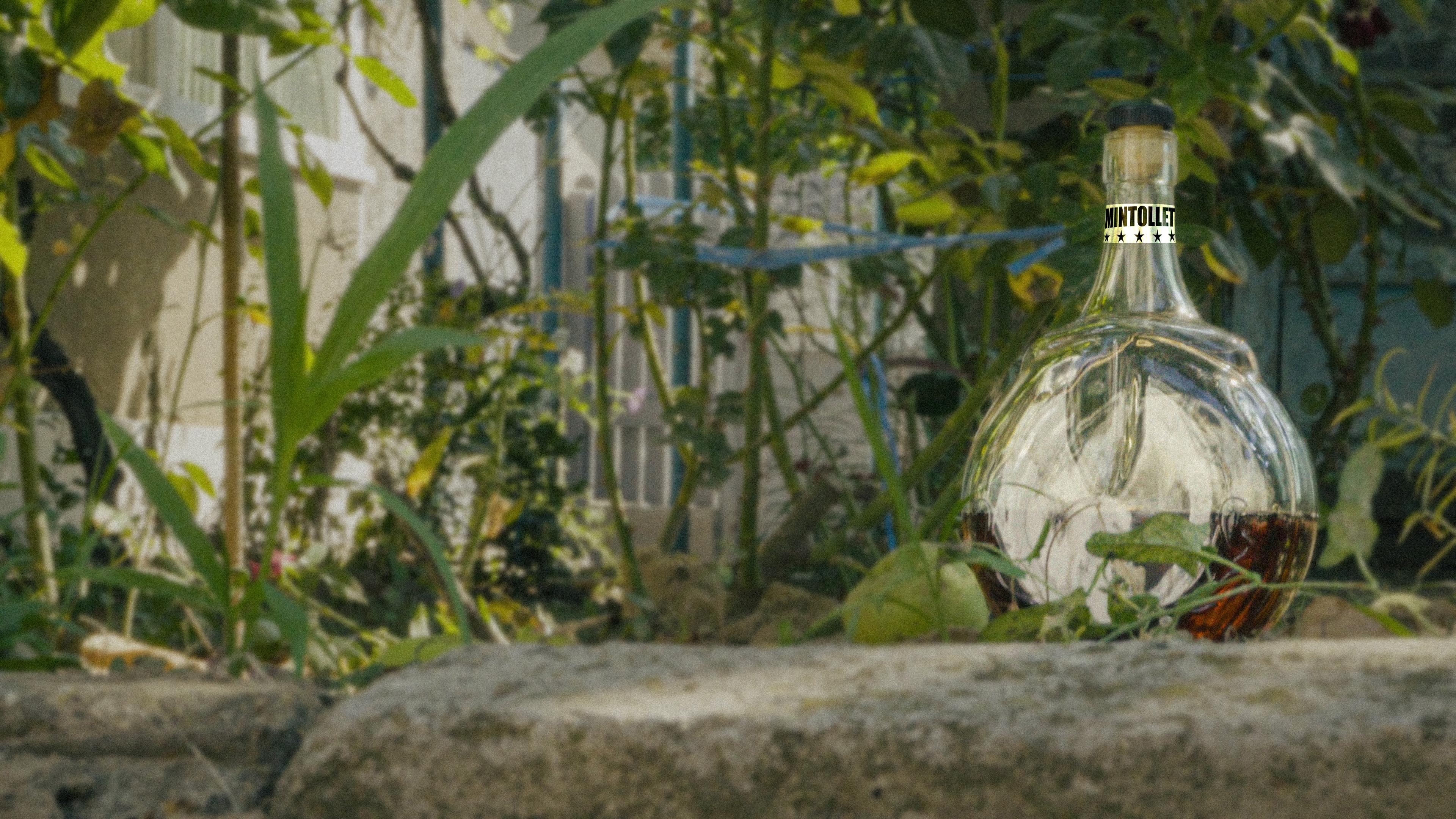
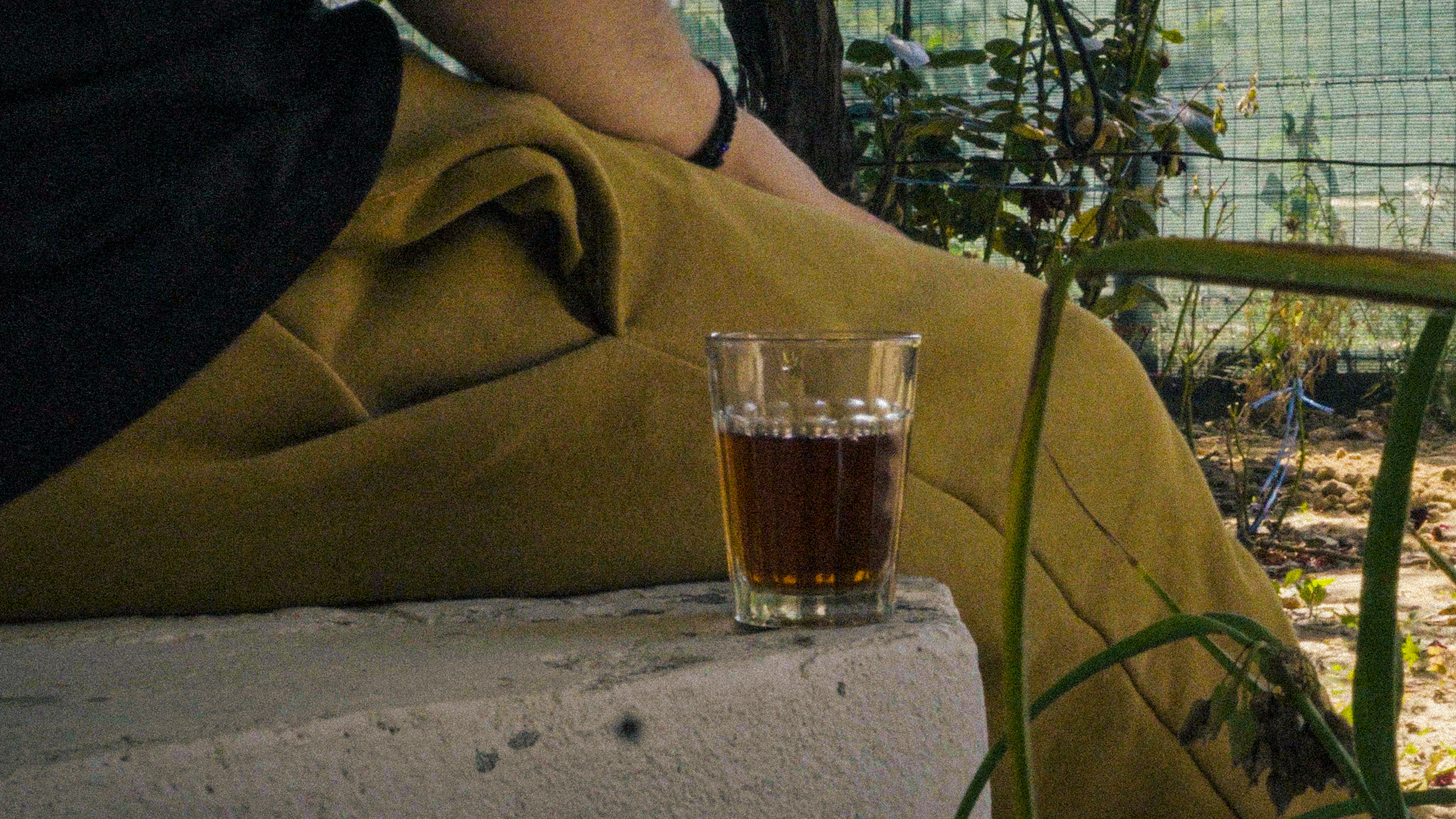
The film holds two registers that never blend. The first is cold and interior: a new apartment, boxes unopened, hard light, a synthetic tone beneath everything. The second is warm and exterior: a yard, trees, moving air, a single acoustic instrument recorded in a real room.
They meet on one frame. As the pupil dilates, the organic instrument enters at full level. No fade, no anticipation and the synthetic tone does not stop. Both continue together to the end. Neither resolves into the other.
That single frame is the film. Everything before it builds toward the collision, everything after it holds the two worlds in the same room.
NOTE: Mintollet is a fictional brand. The film was made to demonstrate how a placeless identity can gain a specific sense of place through sound and image alone.
We Are Vacant is a studio built on a single decision: that sound and image are made together, by the same hand, at the same time.
This is unusual, and it is the reason the work looks and sounds the way it does. In most productions the picture is shot by one team, graded by another, and scored last by whoever is available, coordination standing in for authorship.
The result is competent and belongs to no one. What we make is not assembled. It is written in both media at once.
A brand is not the audience for its own film. We build from the other end: who has to feel something, in what conditions, and what has to happen in the first two seconds for them to stay. The brand's preferences matter, but they are not the test. The test is the person watching.
WAV (THE SIGNAL)
The name comes from the audio format. A .wav file is uncompressed, the signal before anything is taken out of it.
VACANT (THE SPACE BEFORE IDENTITY)
Vacant is the space most brands leave unfilled: they know exactly how they look, and not at all how they sound or move.
We work from Romania, which is less incidental than it sounds. Small markets teach you that nothing carries on volume, only on being worth watching.
We don't impose an identity on a brand. We show it one it already had.
Sound is not added after the picture. It is decided with it.
A sound works or doesn't depending on who is hearing it and where. We start from the audience the brand needs, not from the brand's own taste.
The sonic identity and the image are built as one system. What the camera does and what the score does are the same decision, made once. A cut lands on a sound because both were designed to arrive together.
Most brands sound like nothing in particular. Their films are scored by whoever was available, from libraries their competitors also use. We build the sound a brand can be recognised by.
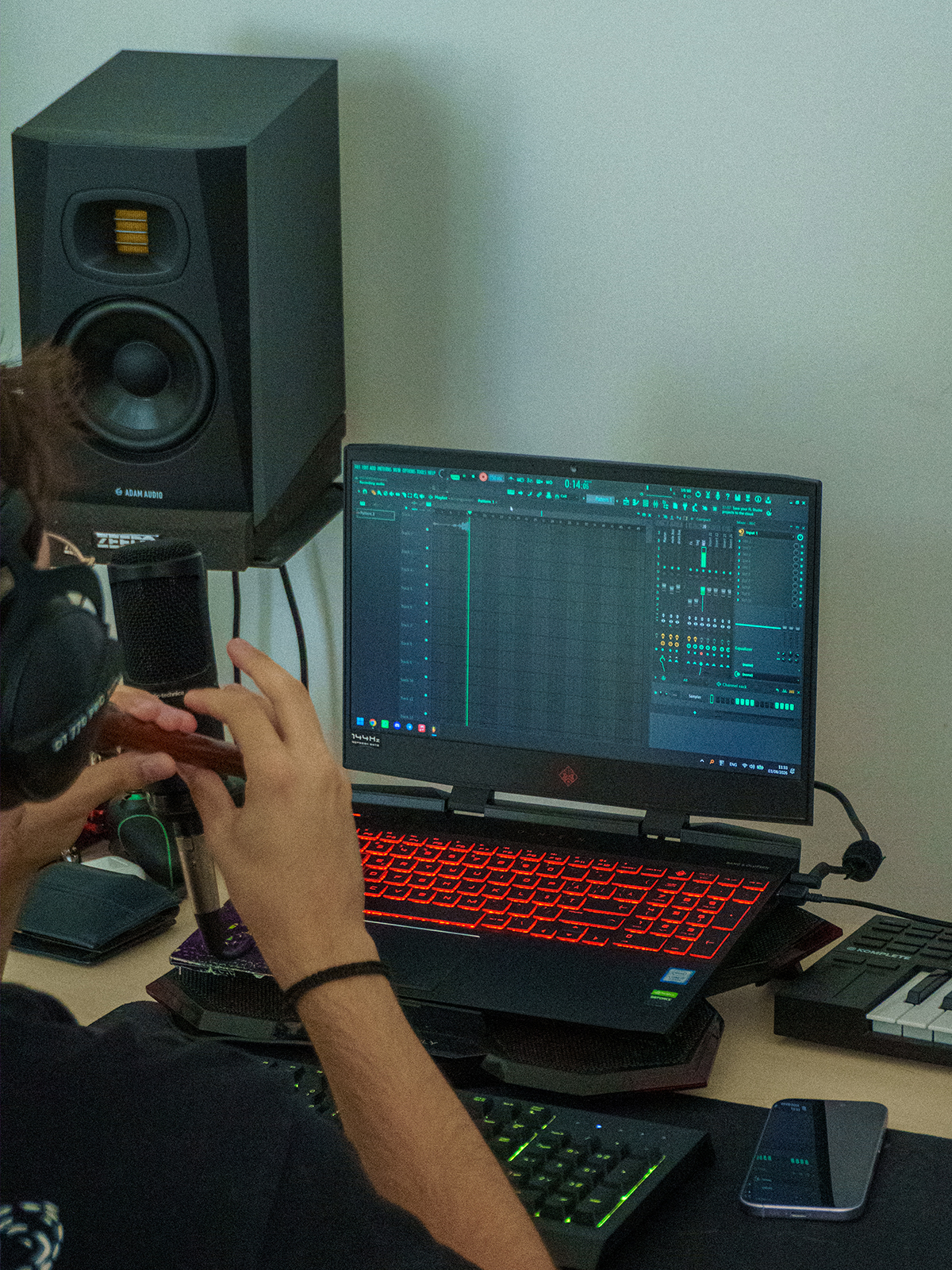
Image is not a surface applied to a message. It is where the message is felt first.
Framing, light, pace. These decide what a viewer feels before they process a word. Which means the decisions belong to the viewer's experience, not to the client's preferences.
We build them as a system, so a brand behaves consistently on screen rather than looking different in every film it makes.
Most brand films are assembled: shot by one team, graded by another, cut to fit a track chosen later. Ours are authored, the same hand deciding what the camera does and what is heard while it does it.
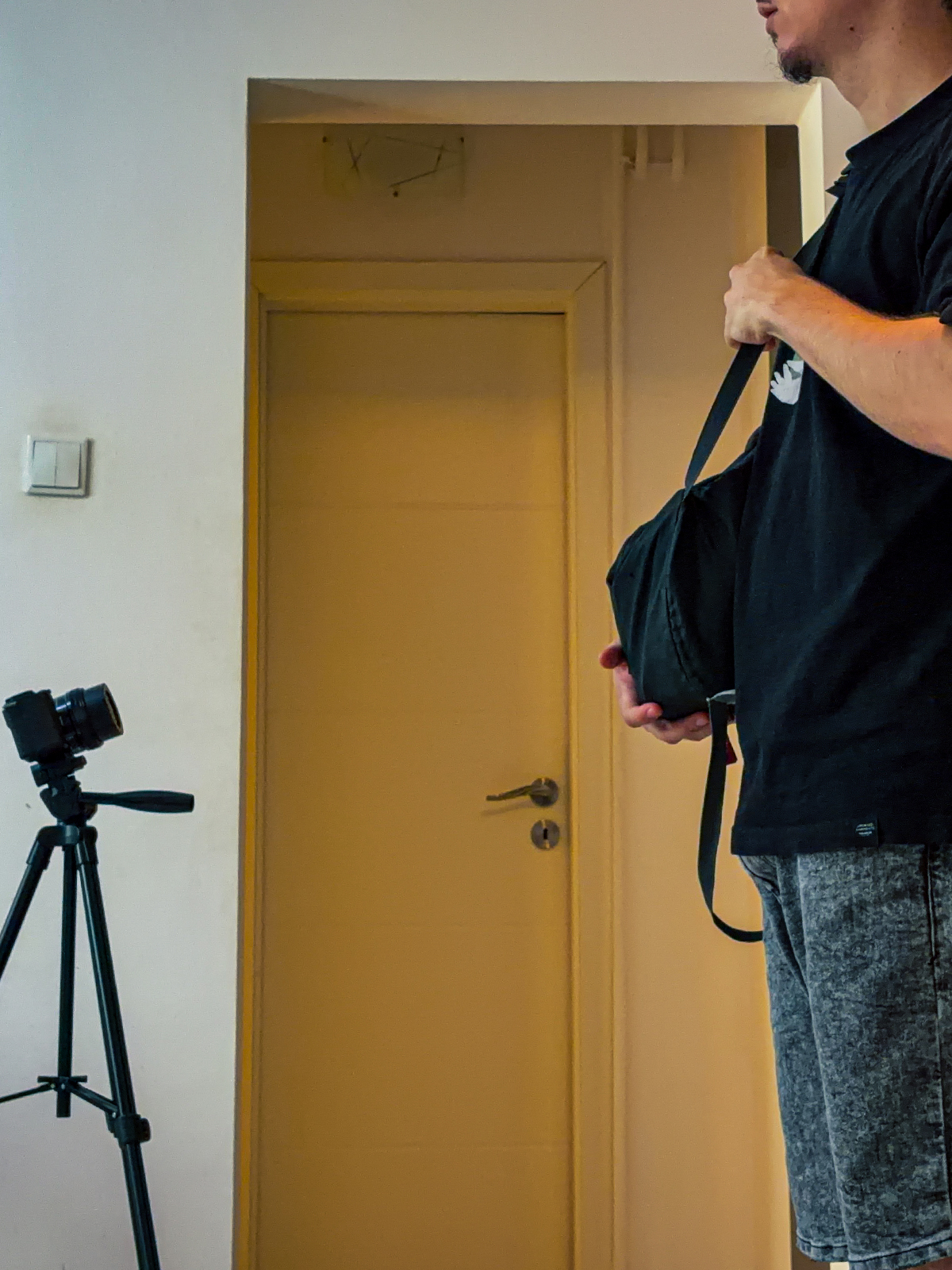
A film is finished many times. Once as the film, then again as thirty seconds, six seconds, a vertical, a silent frame on a wall, thirty seconds of audio with no image at all.
A format is a viewing condition. Someone scrolling at midnight with sound off is not the same person in a cinema. Each version is built for the person actually watching it.
This is usually where identity dies. The cutdowns go to whoever is cheapest, the vertical is a crop, the radio version is the soundtrack with the pictures removed. Nothing that made the original work survives the trip.
We treat versioning as part of the work. Each format keeps what it needs to remain recognisably the same thing and where a format removes half of what we do, we decide what carries the weight instead.
If you’re someone who’s looking to bring an idea to life, share a few details to help us reach out to you so we can discuss how to bring your vision to reality.